How it works
From the first call to a dry crawl space
Seven steps, a county permit, and usually two to four weeks from inspection to final, most of it waiting on the permit and the schedule. The install itself is one to three days.
-
01
You request an inspection
Fill in the form (or call). Your request goes to one local crawl space contractor who covers your area. They call to set a time, usually within one business day.
-
02
The inspection, about an hour
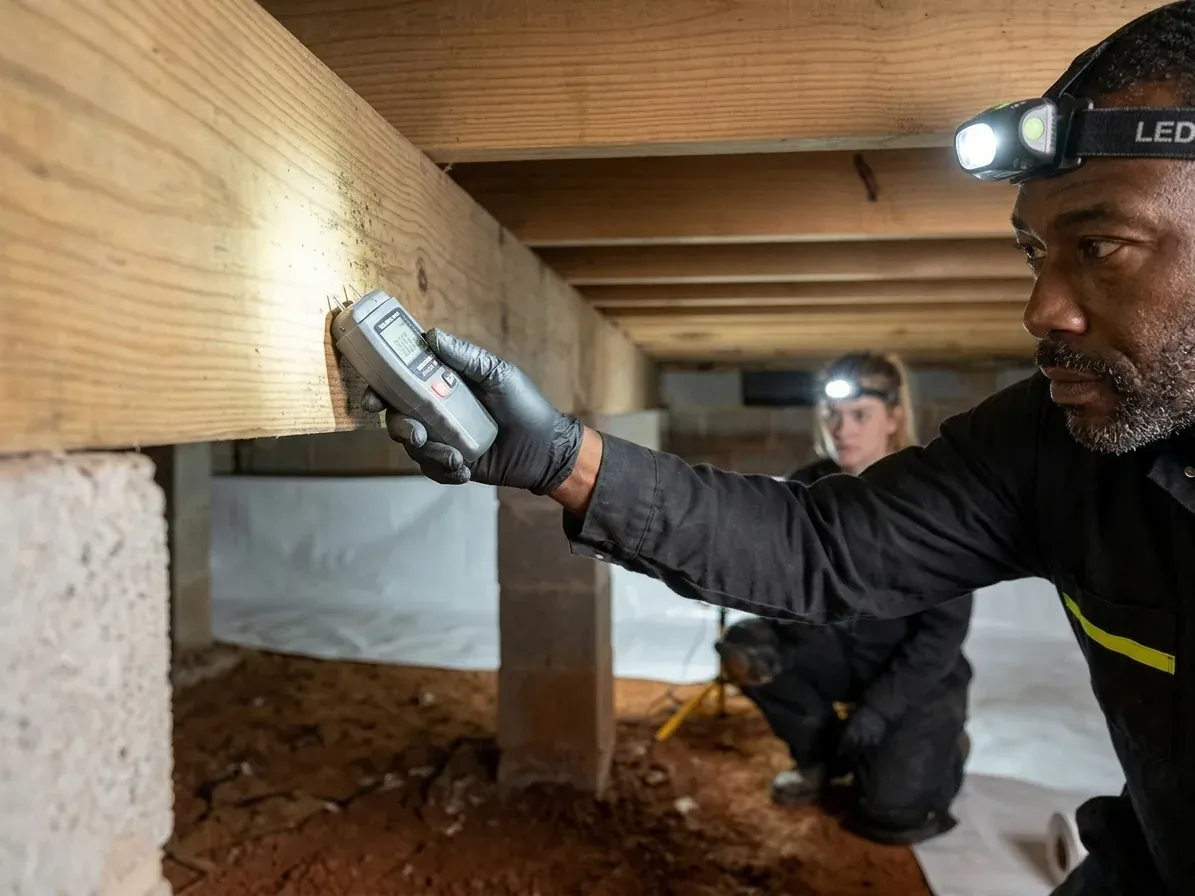
The inspector goes under the house with a light and a moisture meter and records: relative humidity and temperature in the crawl space, moisture in the joists and sill, standing water and where it comes from, the state of the ground cover and insulation, vents, ductwork, signs of pests, and any sagging or rotted framing. You get the photos, and the inspector walks you through them.
-
03
A written quote with options
You get a scope in writing: what is wrong, what fixes it, and what each piece costs. Usually there is a full encapsulation option and a smaller one. No pressure to sign at the door.
-
04
The permit
Converting a vented crawl space to a closed one is permitted work in North Carolina regardless of cost (NC OSFM interpretation of NCRC R409, updated December 2025). One permit covers the building, mechanical and electrical inspections. In Mecklenburg County it is issued by Mecklenburg County Code Enforcement; Union, Cabarrus, Gaston, Iredell and the South Carolina counties have their own. The contractor applies for it.
-
05
Prep, drainage and repairs
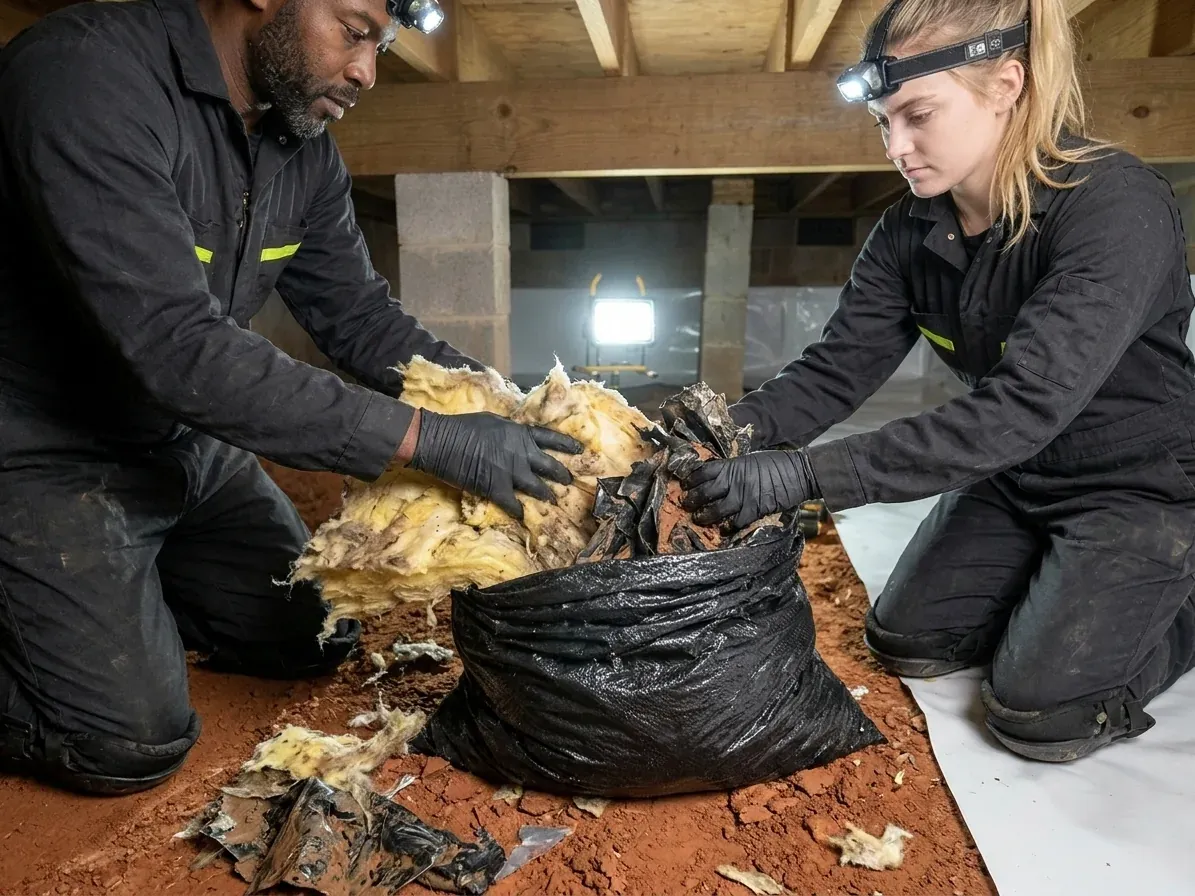
Debris, old plastic and wet insulation come out. Any drainage, sump, wood repair or support posts are done now, because none of it is easy once the liner is down.
-
06
Liner, sealing and dehumidifier
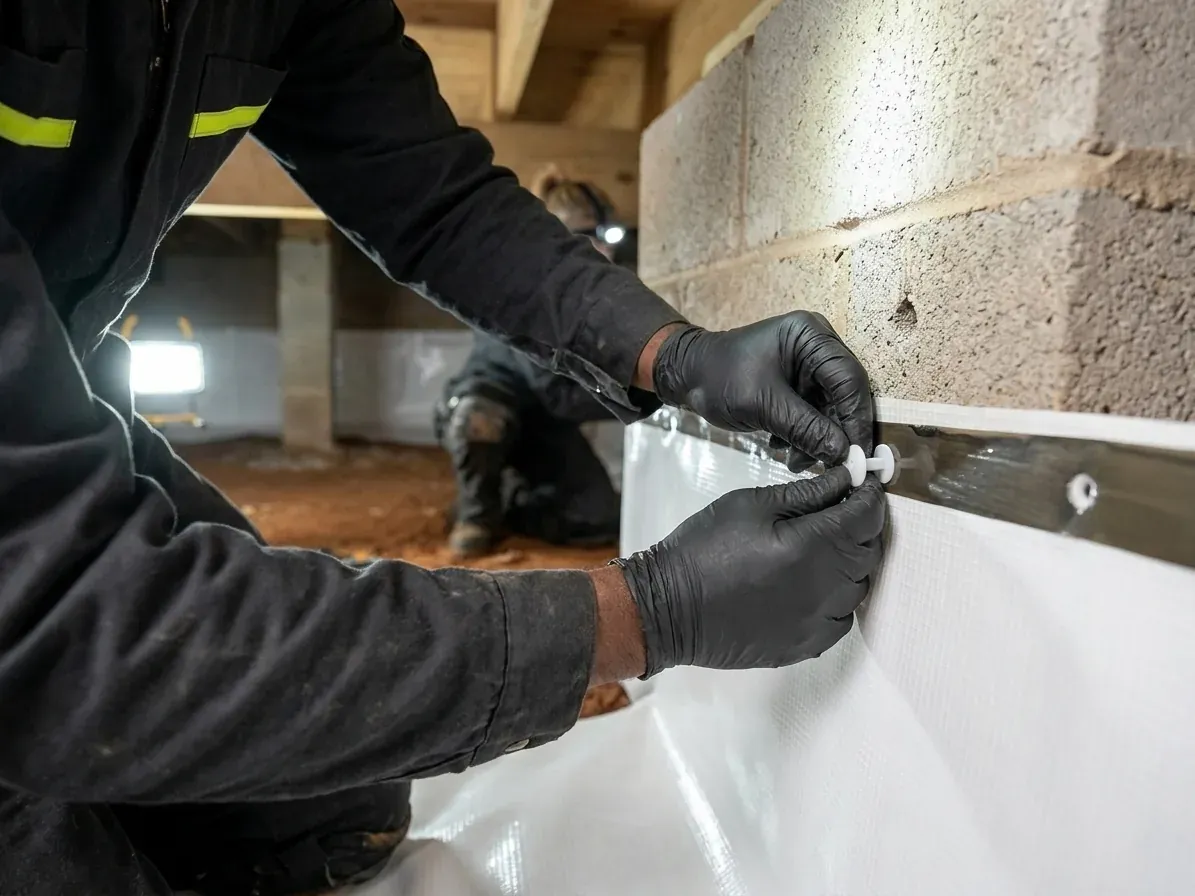
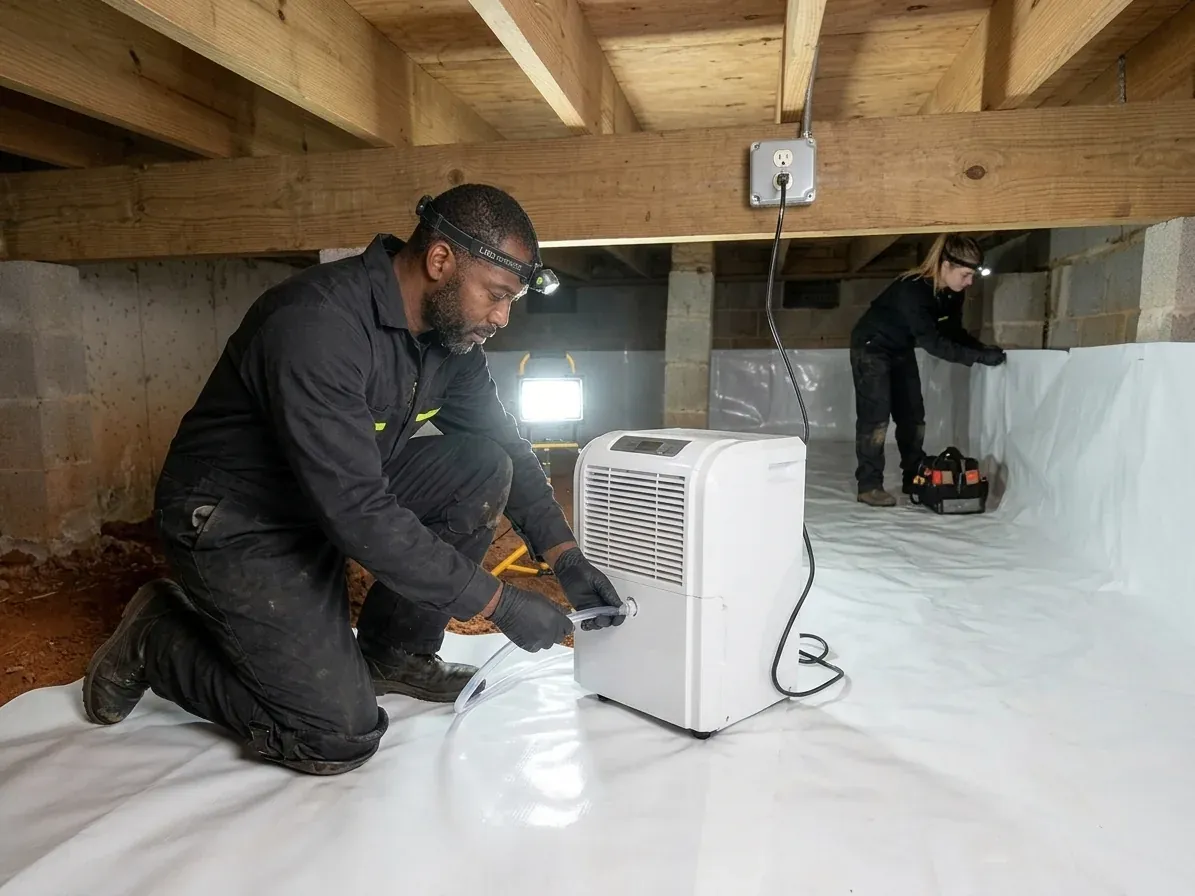
The 20-mil liner goes over the floor, up the walls and around each pier, with taped seams and a sealed top edge. Vents and rim joist are sealed, the access door is gasketed, and the dehumidifier is set on its drain and dedicated outlet. Most installs take one to three days.
-
07
Final inspection and readings
The county inspects the finished work. The dehumidifier is set to hold about 50–55% humidity, and you should see the first-floor air feel different within a few weeks of summer weather.
Afterwards
Living with a closed crawl space
Keep the dehumidifier running
Leave it on year-round. Clean or replace its filter as the maker recommends, usually every few months.
Keep people off the liner with boots on
Plumbers, HVAC techs and pest inspectors should crawl on it, not drag equipment across it. Tears get a patch and tape.
Check it once a year
A look under the house each spring: no water on the liner, dehumidifier draining, no new termite tubes at the inspection strip.
Keep gutters clear
Most crawl space water starts at a clogged gutter or a downspout dumping next to the foundation.
Free crawl space inspection.
Moisture readings, photos of everything under the house, and a written quote. No obligation.